


Let’s be honest, “digital transformation” gets thrown around a lot. It sounds big, complicated, and expensive—something reserved for massive corporations with deep pockets.
But what does it actually mean for a small or medium-sized Australian business like yours?
Think of it like renovating a classic Queenslander. You wouldn’t just stick a new smart TV on the wall and call it a day, would you? Of course not. You’d look at the fundamentals: rewiring the electrics for safety and efficiency, maybe knocking down a wall to create an open-plan living space that works better for your family.
That’s digital transformation in a nutshell. It’s not about buying the latest flashy software. It’s a fundamental rethink of how you run your business using smart technology to deliver more value to your customers and make life easier for your team.

It’s More Than Just Going Paperless
A common first step for many businesses is to digitise old paper forms. That’s a great start, but it only scratches the surface. Real transformation happens when you rethink the entire process from the ground up.
For example, a Perth-based plumbing company might swap their paper quote pads for PDFs. That’s digitisation. Digital transformation is when they use an app that lets their plumbers build a quote on-site, get the customer’s signature on the spot, and automatically send an invoice the moment the job is done.
The focus shifts from simply digitising a document to creating a seamless, valuable experience for everyone involved.
True digital transformation is about using technology to solve real problems. It’s about creating genuine value for your customers and streamlining your internal operations to build a more resilient, competitive business.
To help clear up any confusion, here’s a quick look at what we mean when we talk about digital transformation for a typical Aussie SMB.
Digital Transformation at a Glance
| It’s About… | It’s Not Just About… |
|---|---|
| Rethinking entire workflows for efficiency | Buying new software and hoping for the best |
| Solving customer problems with tech | Simply turning paper forms into PDFs |
| Integrating systems so they “talk” to each other | Having a collection of disconnected apps |
| Using data to make smarter decisions | Guessing what your customers want |
| Empowering your team with better tools | Creating more admin work |
Ultimately, this is about putting the right tools and processes in place so you can build a stronger, more efficient business from the inside out.
A Mindset Shift for Australian SMBs
At its core, digital transformation is a cultural change. It’s about empowering your team to use technology and data to make smarter, faster decisions. It’s about fostering a mindset of continuous improvement, where everyone is encouraged to find better ways of working.
This might look like:
- Creating real customer value: Using a CRM to personalise your communication and truly understand what your customers need from you.
- Streamlining your operations: Automating those repetitive admin tasks that drain time, freeing your team to focus on the work that actually grows the business.
- Boosting your agility: Using cloud-based tools so your team can collaborate effectively, whether they’re in the office in Sydney, on-site in the Pilbara, or working from home.
For Australian SMBs, this isn’t just a trend—it’s essential for survival and growth. By integrating your systems, you create a connected ecosystem where information flows freely between marketing, sales, and operations. This is often achieved by understanding what an API is and how it allows different pieces of software to talk to each other, forming the digital backbone of a modern, efficient business.
The Three Pillars of a Successful Transformation
A powerful digital transformation isn’t about just plugging in new software and hoping for the best. It’s a balanced strategy, much like a three-legged stool—if one leg is shorter or weaker than the others, the whole thing comes crashing down. To build something that lasts, you need to focus equally on three core pillars: People, Process, and Technology.

When these three elements work in harmony, they create a solid foundation for genuine, sustainable growth. Overlooking any one of them is the fastest way to end up with expensive tools nobody uses and processes that cause more problems than they solve.
Pillar 1: People — Your Team Comes First
Before a single new app is installed or a workflow is changed, the entire journey begins and ends with your team. They’re the ones who will use the new systems day in and day out, and their buy-in is the single most critical factor for success.
Change is often met with resistance, which is completely natural. People are comfortable with what they know. The trick is to shift the narrative from “this is a change you have to deal with” to “this is an upgrade that will make your job easier and more rewarding.”
To get your team on board, you should:
- Communicate the ‘Why’ Clearly: Don’t just talk about business benefits; explain what’s in it for them. Will a new system eliminate tedious data entry? Will it help them get back to customers faster?
- Involve Them Early: Ask your team about their biggest daily frustrations. When they feel heard and are part of building the solution, they become champions for the change, not obstacles.
- Provide Proper Training and Support: Never just hand over a new tool and expect them to figure it out. Invest in proper training and be there to answer questions as they adapt.
A culture that embraces change doesn’t happen by accident. It’s built on trust, clear communication, and shared goals.
Pillar 2: Process — Redefining How Work Gets Done
It’s tempting to jump straight to finding a tech solution for a business problem. But applying new technology to a broken, inefficient process just helps you do the wrong things faster. You end up automating chaos, not creating efficiency.
This is why mapping out and refining your processes is such a crucial middle step. Before you even look at software, you need a crystal-clear picture of your current workflows. Where are the bottlenecks? What steps are redundant? Where do communication breakdowns always seem to happen?
A common mistake is simply digitising a clunky, outdated workflow. The goal isn’t to make the old process digital; it’s to design a fundamentally better, simpler, and more effective process from the ground up.
Think about a Brisbane electrician whose quoting process takes hours. It involves manual measurements, calculating materials on a spreadsheet, typing it all up in Word, and finally emailing it. Instead of just finding a faster way to type, the entire process needs to be reimagined. What if they could use an app on-site to enter details, which automatically calculates the price and fires off a professional quote to the client in minutes?
This focus on process improvement is foundational. You can learn more about how a refined process is the first step toward huge time savings by reading up on business automation for even the smallest businesses.
Pillar 3: Technology — The Right Tools for the Job
Finally, with your people on board and your processes mapped out, you can choose the right technology. And the key word here is right. It’s not about the newest, flashiest, or most feature-packed tool; it’s about the tool that precisely solves the problems you identified in the process phase.
Technology is the enabler. It’s the powerful engine that drives your improved processes and empowers your team to do their best work.
Choosing the right technology involves:
- Focusing on a Specific Problem: Select tools that target your biggest pain points first.
- Prioritising Integration: Make sure any new software can “talk” to your existing systems to avoid creating isolated islands of data.
- Considering Scalability: Choose solutions that can grow with your business, so you’re not forced to rip everything out and start over in a year or two.
By balancing People, Process, and Technology, your digital transformation becomes a cohesive strategy—one that delivers real, measurable results and builds a stronger, more competitive business for the future.
Real-World Benefits for Australian Businesses
Understanding the theory is one thing, but seeing how it translates into real dollars and happier customers is what truly matters. For Australian businesses, this isn’t about chasing the latest tech trend; it’s about getting tangible results that strengthen your bottom line and make day-to-day operations smoother.
And it’s not a passing fad. The move to smarter digital solutions is a massive economic driver. The Aussie digital transformation market was valued at USD 18.5 billion in 2024 and is tipped to hit an incredible USD 84.7 billion by 2033. That explosive growth is driven by the real-world need for efficiency and smart tech adoption, showing just how crucial this shift is to stay competitive. You can dig into the numbers in the full report on Australia’s digital economy.

Those big numbers reflect real changes happening in businesses just like yours. So, let’s look at the specific benefits you can expect.
A Superior Customer Experience
Today’s customers demand convenience, speed, and a personal touch. Digital transformation gives you the tools to deliver exactly that, turning one-off buyers into regulars who rave about your business.
Take a busy Melbourne café constantly battling long queues during the morning rush. By implementing a simple online ordering system, they let customers order and pay ahead on their phones.
The impact was instant:
- Shorter wait times: The morning bottleneck vanished, leading to happier, less-stressed customers who weren’t late for work.
- Better order accuracy: Digital orders meant no more mistakes from misheard names or complicated coffee requests.
- Loyalty on repeat: The system gathered customer data, allowing the café to send out personalised deals and rewards that kept people coming back.
This wasn’t about flashy tech. It was about using a smart, simple tool to fix a genuine customer headache, making their whole experience better.
Streamlined and Efficient Operations
One of the biggest wins from digital transformation is getting back your most precious resource: time. When you automate repetitive jobs and connect your systems, you free your team up to focus on the high-value work that actually grows the business.
Think of a Perth-based trade business drowning in paperwork. The owner was stuck doing quotes, scheduling jobs, and chasing invoices on nights and weekends. Adopting a job management software completely flipped their workflow on its head.
The goal is to make your business run smoother, faster, and with fewer errors. It’s about building a well-oiled machine where technology handles the grunt work, allowing your team to excel at what they do best.
Now, their process is a world away from the old paper trail:
- Quoting: Professional quotes are knocked out on-site from a tablet in minutes, not hours.
- Scheduling: Once a quote is approved, the job automatically lands in the team’s calendar with all the right details.
- Invoicing: Invoices are sent the moment a job is marked complete, which has a massive positive impact on cash flow.
This one change cut their admin time by over 15 hours a week, giving the owner more time to build relationships with clients and chase bigger contracts.
Smarter, Data-Driven Decisions
Are you making critical business decisions based on a gut feeling, or are you using hard facts? Digital transformation removes the guesswork by giving you clear, actionable data.
When your sales, marketing, and operational tools talk to each other, you get a complete 360-degree view of your business. You can instantly see which marketing campaigns are bringing in the best leads, identify your most profitable services, and understand what your customers really want. This allows you to put your time and money where they’ll have the biggest impact, making sure every decision is strategic and informed.
Your Practical Roadmap to Getting Started
Embarking on a digital transformation journey can feel a bit like planning a massive road trip across Australia. You wouldn’t just jump in the car and start driving without a plan. You’d get a map, figure out your route, and decide on the key stops along the way. It’s the same with transforming your business—you need a clear, practical roadmap to get you from where you are now to where you want to be.
This isn’t about some rigid, overly complicated document. It’s about breaking the journey into manageable stages. That way, you can start small, rack up some quick wins, and build momentum. For Aussie business owners, this roadmap is built on three simple, logical phases: Assess, Plan, and Implement.
Phase 1: Assess Your Current Position
Before you can map out your future, you need a crystal-clear picture of your present. The Assess phase is all about taking an honest look at your business operations to find out what’s working well and what’s causing friction for your team and your customers.
Start by asking a few fundamental questions:
- Where are the biggest time sinks? Pinpoint the repetitive, manual tasks that chew up hours every week. This could be anything from data entry and invoicing to scheduling jobs.
- What frustrates your customers the most? Is your quoting process painfully slow? Is it a mission for them to get a quick answer to a simple question? Identify those moments where your customer experience just isn’t cutting it.
- Where are the information bottlenecks? Does your sales team have access to the same info as your operations crew? Look for places where data gets stuck in silos, causing delays and mistakes.
This stage is all about identifying your biggest pain points, which in turn reveals your clearest opportunities for improvement. Getting this right sets the foundation for everything that follows.
A classic mistake is to chase a shiny new technology without first understanding the specific problem it needs to solve. Start with the ‘why’—your biggest business challenges—and the ‘what’ and ‘how’ will fall into place much more easily.
Phase 2: Plan Your Route and Pack Your Bags
Once you know your starting point and have a handle on the challenges you want to tackle, it’s time to plan your approach. This phase is about choosing the right tools for the job and, just as importantly, getting your team ready for the journey ahead.
Your plan should cover two key areas:
- Choosing the Right Technology: Based on the pain points you uncovered, start looking into solutions. If slow quoting is the problem, investigate quoting software. If managing customer relationships is a complete mess, a Customer Relationship Management (CRM) system might be the answer. The goal is to find tools that directly solve your problems and, ideally, can talk to each other. As you develop your practical roadmap, consider how automating your sales process can lead to significant, real growth for your business.
- Preparing Your Team: Technology is only half the battle; it’s useless if people don’t use it. Now is the time to communicate the upcoming changes to your team. Explain why you’re making these shifts and how they’ll make everyone’s job easier. Involve them in the decision-making where you can, and make sure you schedule proper training so everyone feels confident and supported.
A solid plan means that when you’re ready to go, you have the right tools and a team that’s genuinely on board and prepared to use them.
Phase 3: Implement and Refine Your Approach
This is where the rubber meets the road. The Implement phase is about launching your new tools and processes, then keeping a close eye on the results to see what’s working. Don’t aim for perfection on day one. The real goal is to get started and then refine as you go.
This final stage is a continuous loop of action and analysis:
- Launch: Roll out the new system or process. If you can, start with a small pilot group to iron out any initial kinks before it goes company-wide.
- Measure: Track key metrics to see if the changes are actually having the effect you wanted. Are you saving time? Is customer feedback getting better? Are you closing more deals? Setting up your analytics correctly is vital. For many businesses, a deep dive into everything you need to know about GA4 is a brilliant place to start understanding your website’s performance.
- Gather Feedback: Actually talk to your team and your customers. What do they like about the new process? What’s still causing headaches?
- Refine: Use the data and feedback you’ve collected to make small, smart adjustments. Digital transformation isn’t a one-and-done project; it’s a process of constant improvement.
By following this three-stage roadmap, you can approach digital transformation with confidence, making steady, measurable progress towards building a more efficient and profitable business.
Navigating the Common Challenges and Pitfalls
Every big business journey has its share of bumps in the road, and digital transformation is no different. While the benefits are clear, the key to a realistic and resilient strategy is anticipating the common roadblocks Australian businesses face. When you see these challenges coming, you can build solutions right into your plan from day one.
Hurdles like team resistance, tight budgets, and the sheer volume of technology options can feel daunting. But with a proactive approach, every single one is manageable. Understanding these potential pitfalls is the first step to making sure your transformation journey is a smooth and successful one.
Challenge 1: Overcoming Team Resistance
The most common obstacle isn’t the technology—it’s the people. Change can be unsettling, and it’s completely natural for team members to be wary of new systems or processes that mess with their familiar routines. They might worry about their job security or feel swamped by the need to learn new skills.
The solution is all about clear, empathetic communication and getting everyone involved. Instead of just imposing change from the top down, bring your team into the conversation early.
- Explain the ‘Why’ for Them: Don’t just talk about business benefits. Frame the changes in terms of how they will make your team’s jobs easier. Will it kill off tedious paperwork? Will it help them get answers to customers faster?
- Create Digital Champions: Find those enthusiastic team members and get them involved in picking and testing new tools. Their positive experience will become a powerful endorsement for everyone else.
- Invest in Training: Proper, patient training is non-negotiable. When your team feels confident and supported, that fear of the unknown quickly turns into an appreciation for better tools.
Challenge 2: Managing Budgets and Costs
For many small and medium businesses, the perceived cost of digital transformation is a huge barrier. The good news? You don’t need a massive, upfront investment to get started. The trick is to be strategic, focusing on initiatives that deliver the biggest impact for the lowest cost.
The most successful transformations don’t happen all at once. They are a series of small, calculated steps that build on each other, delivering measurable ROI at each stage and funding the next phase of growth.
Start by tackling the “low-hanging fruit”—those small changes that can solve a major pain point without breaking the bank. This could be a simple scheduling tool that saves hours of admin time or a basic CRM to get customer data organised. These early wins prove the value immediately and build a strong business case for more significant investments down the line.
Challenge 3: Choosing the Right Technology
The market is flooded with software solutions, all promising to be the next big thing for your business. This “paradox of choice” can be paralysing, making it hard to even know where to begin. It’s a common trap for businesses to buy feature-packed, expensive software they only end up using a fraction of.
The roadmap below shows a simple, effective way to guide your technology choices and your overall strategy.
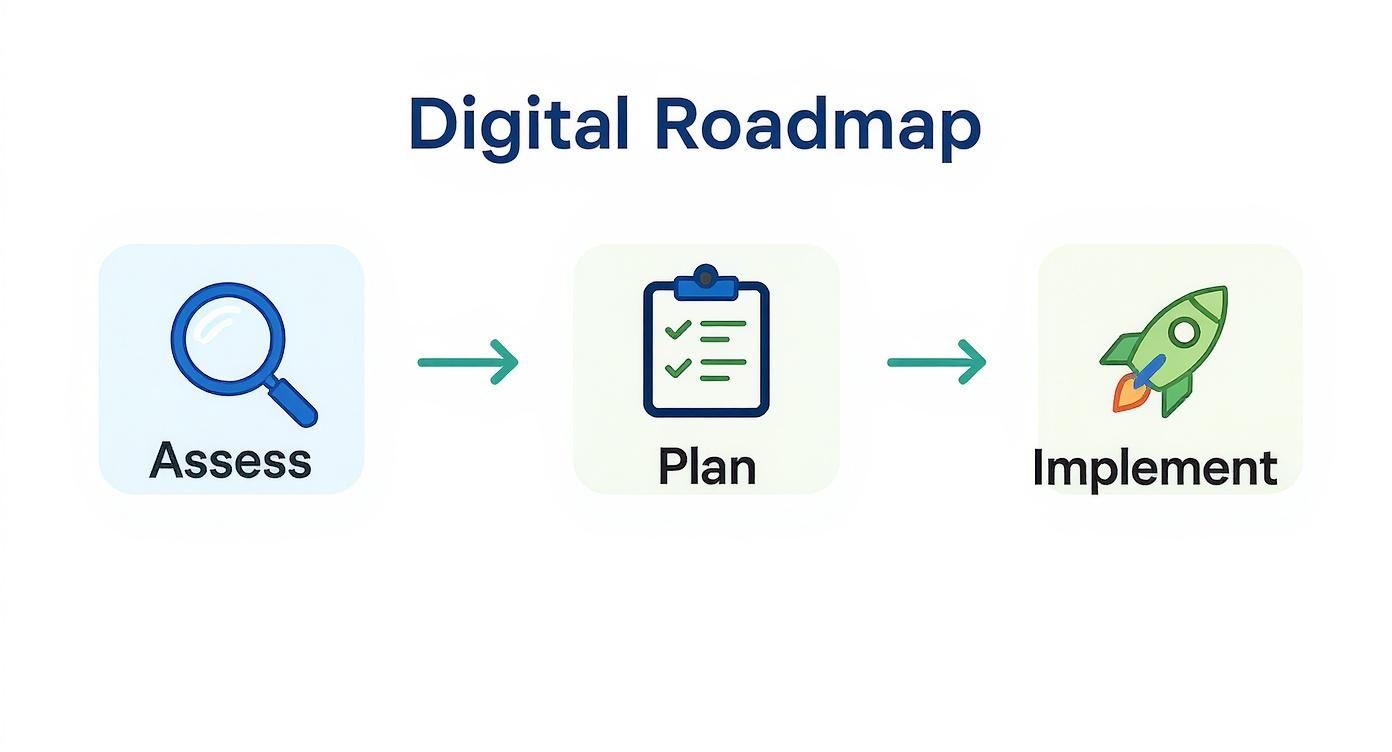
As the visual shows, successful implementation always starts with a deep understanding of your specific needs. Instead of getting distracted by fancy features, stay focused on the problems you identified during your assessment. Choose tools that solve those specific issues first. It’s also smart to prioritise solutions that can integrate with the systems you already have, avoiding the headache of creating isolated data silos. By focusing on your core needs, you can cut through the noise and pick technology that delivers real, measurable results.
Digital Transformation in Action Across Australia
All the theory is great, but seeing is believing. The penny really drops when you see digital transformation delivering concrete results for Australian businesses, big and small. These aren’t just stories about big corporations with deep pockets; they’re real-world examples of how smart, practical changes are creating genuine success right across the country.
The national push towards a more digital economy is impossible to ignore. Australia’s tech investment is surging, with spending on AI systems alone expected to hit $3.6 billion by 2025. This isn’t just happening in boardrooms; it’s driven by businesses of all sizes finding clever ways to work smarter. You can get more insights on Australia’s digital transformation journey.
These examples prove that transformation isn’t some abstract buzzword—it’s a tangible strategy for growth.
From Downtime to Data-Driven Decisions in Manufacturing
Picture a manufacturing firm in Western Sydney that was constantly fighting unexpected equipment breakdowns. Every time a critical machine went down, it meant costly production delays, blown deadlines, and frustrated clients. Their entire approach to maintenance was reactive—basically waiting for things to break before fixing them.
By installing simple Internet of Things (IoT) sensors on their machinery, they completely changed the game. These sensors started collecting real-time data on performance, temperature, and vibration, feeding everything back to a central system.
This small change shifted their entire operational mindset. Instead of waiting for a breakdown, they began using data to predict when a machine would need attention. They could schedule maintenance during quiet periods and avoid those gut-wrenching, costly disruptions.
The results were massive:
- Reduced Unplanned Downtime: They cut unexpected breakdowns by over 70%.
- Lower Maintenance Costs: Proactive servicing is far cheaper than emergency repairs and replacing major parts.
- Increased Production Capacity: With machines running like clockwork, they could confidently take on more orders.
Tripling Bookings for a Regional Tourism Operator
Now, let’s head to regional Queensland. A small tourism operator was drowning in manual booking processes. It was a mess of endless phone calls, back-and-forth emails, and a chaotic spreadsheet that was an accident waiting to happen. The process was slow, prone to double-bookings, and simply couldn’t scale.
They made a single, powerful change: they invested in a modern online booking and management system integrated directly into their website.
This revolutionised their entire customer-facing operation. Now, customers can see live availability and book their tours 24/7, without ever needing to pick up the phone. The system automatically updates the calendar, sends confirmation emails, and even follows up with reminders.
The owner was freed up to focus on what they actually love doing: creating amazing experiences for their guests. It’s a perfect example of how automating key business processes can directly fuel growth and make customers happier.
Frequently Asked Questions
Even with a clear roadmap, it’s completely normal to have a few questions. Here are some straightforward answers to the queries we hear most often from Australian business owners wondering what all this means for their day-to-day.
How Much Should I Budget for Digital Transformation?
There’s no single price tag. The best approach is to start small, focusing on one high-impact area where you can see a clear return. Forget about a massive upfront cost; think of it as a scalable investment.
A small project, like getting a basic CRM in place to finally organise your customer data, can often kick off for just a few hundred dollars a month. This first win then builds a rock-solid business case for bigger projects down the track.
How Long Until I See a Return on My Investment?
The timeline for seeing a return depends entirely on the problem you’re solving. Some changes deliver results almost instantly. For example, setting up an automated quoting system can slash your admin hours from the very first week.
Other, more involved projects—like integrating your entire sales and operations workflow—might take a few months to show their full financial benefit. The key is to focus on quick wins first to build momentum and get everyone on board.
Do I Need a Full-Time IT Person to Manage This?
Absolutely not, especially if you’re a small or medium business. Most modern cloud-based software is designed to be user-friendly, meaning you can manage it without needing a degree in computer science. A good digital strategy should reduce complexity, not add to it.
Many businesses find that partnering with an agency for the initial setup and strategy gives them all the expertise they need, without the overhead of another full-time salary. This lets you get on with running your business while the experts handle the technical side of things.
Ready to stop guessing and start growing? At DigitUX, we specialise in creating practical, results-driven digital strategies for Australian businesses. We’ll help you innovate, elevate, and automate for real profit and performance. Start your transformation journey with us today.