




Your customers have a new way to find a local business, and it doesn’t look like a list of map pins.
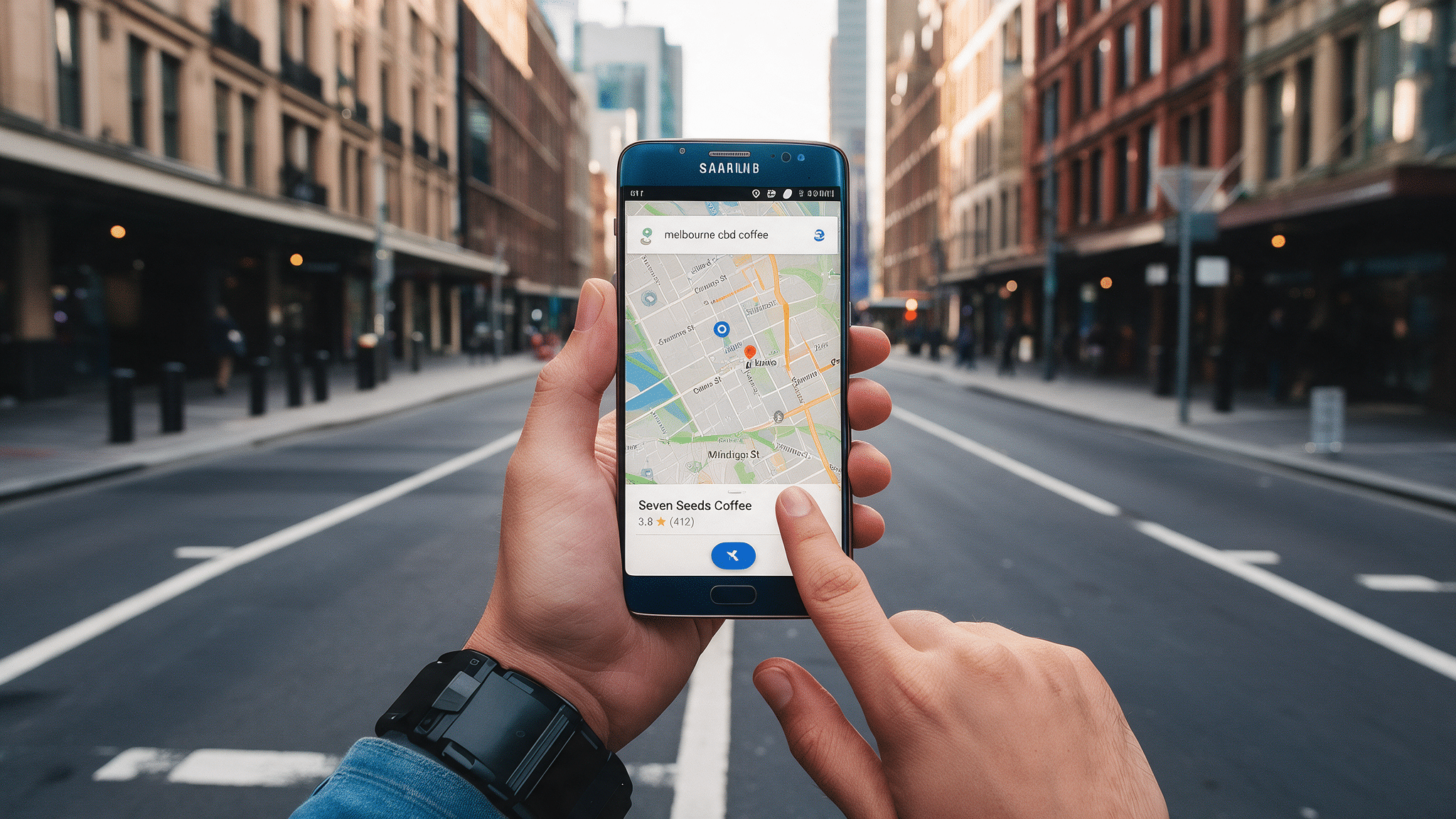
Since August 2026, Google Maps users in Australia have been able to use Ask Maps, a Gemini-powered assistant that answers questions in natural, conversational language. Instead of scrolling through twenty listings, a customer can ask something like “Which electrician near Paddington can come out today for a tripped safety switch?” and receive a short set of recommended businesses, each with a reason it fits.
If your business is one of those few, you’re in front of a customer who is ready to act. If it isn’t, that customer may never see you at all.
Here’s what Ask Maps is, how it appears to choose businesses, and what Brisbane businesses can do now to become easier to recommend.
Key takeaways
- Ask Maps began rolling out in Australia in August 2026, following earlier launches in the US and India.
- Independent testing found it usually shows a small set of businesses (around 3–8), not a long list.
- It appears to lean heavily on your Google Business Profile and the words customers use in reviews, with your website playing a bigger role for complex or higher-cost decisions.
- Google hasn’t published how Ask Maps chooses businesses, so treat any “ranking factor” claims as directional.
- There are no ads in Ask Maps yet, which makes now the window to strengthen your organic presence.
What is Google Ask Maps?
Ask Maps is a conversational feature inside the Google Maps app, powered by Google’s Gemini AI. Google launched it in the US and India first, then began rolling it out to Australia and more than 150 other countries and territories in August 2026.
Rather than returning blue links or a scroll of pins, Ask Maps combines business details and review content into a single answer shown on a personalised map. Results can also be tailored to what the person has previously searched for or saved in Maps.
The data behind it is enormous. According to AP reporting, Gemini’s recommendations draw on more than 300 million places and reviews from over 500 million contributors built up over Google Maps’ twenty-year history.
Why this changes local search
Traditional Google Maps gives people a long list and lets them compare. Ask Maps does the comparing for them.
Testing published by local SEO consultant Rich Sanger in Search Engine Land found that Ask Maps typically returned around three to eight businesses, depending on the query. It narrows the field first, then explains why each business suits the request.
That creates two hurdles instead of one:
- Eligibility — is your business a relevant option at all?
- Confidence — does Google know enough about your business to recommend it and explain why?
In a traditional map listing, sitting ninth still meant someone might scroll down and find you. In Ask Maps, there is often no ninth position.
What Ask Maps appears to use to choose businesses
Google hasn’t published the signals behind Ask Maps. What follows is based on independent testing and observed patterns, so treat it as a strong direction rather than a confirmed formula.
Your Google Business Profile is your identity
For straightforward searches, Ask Maps relies heavily on Google Business Profile data: your description, services, categories, reviews, ratings and operating details. That makes your profile the primary source of how Google understands your business.
A basic profile says what you do. A strong profile also explains the types of jobs and situations you handle. For example, a plumber listing “blocked drains, emergency call-outs within 60 minutes, older Queenslander homes, hot water system replacements” gives Google far more to match against real questions than one that simply says “plumbing services”.
The words in your reviews shape how you’re described
This is one of the most important findings. In testing, the themes customers mentioned in reviews (responsiveness, honesty, clear communication, careful workmanship) showed up in how Ask Maps described the business itself.
In other words, review volume and star rating still matter, but the content of reviews now helps decide what your business is known for. “Great service” adds little. A review that mentions a same-day response to a burst pipe in Ashgrove and a clear explanation of the options tells Google exactly when to recommend you.
Your website matters more when the decision is bigger
For simple searches, your profile and reviews do most of the work. As questions become more specific, more expensive or more uncertain (“should I repair or replace my 15-year-old air conditioner?”), Ask Maps appears to look for additional supporting evidence, including your website.
Service pages that explain the situations that lead to a job, the options available and what customers can expect align closely with the way people now ask questions.
Consistency across the web confirms the story
For trust-sensitive questions, Ask Maps may draw on directories and other third-party sources too. If your business name, address, phone number and services are described differently across your website, profile and directory listings, the picture becomes blurry. When everything matches, each source reinforces the others.
Can businesses pay to appear in Ask Maps?
Not at the moment. Google hasn’t announced ads in Ask Maps, and executives declined to say whether businesses could eventually pay for placement.
That makes right now an organic-only window. The businesses that build clear, well-supported profiles before paid placements arrive will be in the strongest position either way.
How to make your business easier for Ask Maps to recommend
- Audit your Google Business Profile end to end. Choose the most specific primary category, add every relevant secondary category, list each service with its own description, and keep hours, holiday hours and service areas accurate.
- Rewrite your business description around real jobs and situations. Replace slogans with specifics: what you do, who you do it for, where, and the problems you solve most often.
- Build a steady flow of detailed reviews. Ask every happy customer to describe what you did for them in their own words. Never script, incentivise or filter reviews; that breaches Google’s policies and puts your profile at risk.
- Respond to every review. Thoughtful, specific responses add context and show you’re active and accountable.
- Add real photos regularly. Your team, your vehicles, your premises and completed work all help Google (and customers) understand your business.
- Strengthen your service pages. Explain the situations behind each service, common warning signs, the options available and what happens next. Make your local service areas clear on the page.
- Fix inconsistent listings. Check that your business name, address, phone and services match across your website, Google Business Profile and key Australian directories.
- Test it yourself every month. Open Google Maps, tap Ask Maps, and ask the questions your customers ask. Record which businesses are recommended and how they’re described. There’s currently no way to isolate Ask Maps performance in standard reporting, so hands-on testing is the most reliable check.
What not to do
Ask Maps isn’t a separate channel that needs its own bag of tricks. Avoid:
- Stuffing keywords into your business description or business name
- Publishing thin, AI-generated pages written only to target AI systems
- Duplicating near-identical suburb pages at scale
- Buying, swapping or scripting reviews
These tactics add volume without adding genuine evidence, and they carry real policy risk.
How DigitUX can help
Ask Maps is part of a wider shift in how people find local businesses across Google AI Overviews, AI Mode, Google Maps and ChatGPT. Our Local AI SEO and Google Business Profile management services are built to make your business clear, consistent and credible across every one of those surfaces.
If you’d like to know how your business currently appears when customers ask Google Maps for help, contact the DigitUX team or call (07) 3535 0633.
Frequently asked questions
Is Google Ask Maps available in Australia? Yes. Google began rolling out Ask Maps in Australia, alongside more than 150 other countries and territories, in August 2026.
How many businesses does Ask Maps show? Independent testing found Ask Maps typically shows around three to eight businesses, depending on the question, rather than a long scrolling list.
Can I pay to appear in Ask Maps? Not currently. Google hasn’t announced ads in Ask Maps, though it hasn’t ruled them out.
Does my website affect Ask Maps recommendations? Your Google Business Profile and reviews carry most of the weight for simple questions. For more complex or higher-cost decisions, testing suggests your website content plays a larger role.
Can I track how my business performs in Ask Maps? Not in isolation yet. Standard reporting tools don’t separate Ask Maps visibility, so regular hands-on testing of real customer questions is the best available check.
Sources
- EFTM, “Google rolls out Gemini-powered Ask Maps to 150+ countries including Australia”, August 2026
- Search Engine Journal, “Google Maps launches AI conversational search with Ask Maps”
- Search Engine Land, Rich Sanger, “Google Ask Maps: How to optimize for visibility”, 20 May 2026
- AP via Mudgee Guardian, “Google to overhaul its Maps app, add more AI features”