



A digital transformation agency in Australia does more than just marketing. It's your partner in redesigning how your business works from the inside out—improving everything from daily tasks and customer interactions to your core strategy. It uses technology to build a smarter, more efficient, and competitive company.
It’s not just about advertising better; it's about being better. This strategic shift is what prepares Australian companies to thrive in a tough market.
Why Australian Businesses Need More Than Just Digital Marketing
The business landscape in Australia is changing fast. For a long time, "going digital" meant having a website and running a few social media ads. While those are still important, they are now just a small part of what it takes to succeed.

Here’s a helpful way to think about it: digital marketing is like putting a high-performance engine in your old car. It will definitely make you go faster.
Digital transformation, on the other hand, is like designing and building an entirely new electric vehicle from scratch, perfectly engineered for the roads of tomorrow. One is an upgrade; the other is a complete reinvention.
This is why smart Australian SMEs and enterprises are now looking for a digital transformation agency. They want a partner to help rewire their entire business for future growth, not just someone to chase clicks.
The Real Difference in Scope
To get a clearer picture of what separates these two, it helps to see them side-by-side. One is focused on attracting customers (the 'outside'), while the other strengthens your business itself (the 'inside').
Digital Marketing vs Digital Transformation
| Aspect | Digital Marketing | Digital Transformation |
|---|---|---|
| Primary Goal | Attract customers and generate leads. | Reinvent core business operations for efficiency and growth. |
| Focus | External promotion and visibility. | Internal processes, systems, and customer experience. |
| Timeframe | Short-to-medium term campaigns. | Long-term, continuous strategic change. |
| Typical Activities | SEO, social media ads, email campaigns. | Process automation, CRM integration, data analytics. |
| Outcome | More website traffic and sales. | A more agile, scalable, and resilient business. |
This table makes the distinction clear: marketing gets you into the race, but transformation builds a vehicle that can win it.
This shift in focus is backed by serious numbers. The Australian digital transformation market hit USD 18.5 billion in 2024 and is expected to rocket to USD 84.7 billion by 2033, powered by AI and cloud computing. If you're curious, you can explore more about Australia's digital market growth in this report.
A specialist agency like DigitUX helps you rethink everything from how a customer first finds you to how your team fulfils an order, creating efficiencies that marketing alone could never achieve.
From Surface-Level Tactics to Core Strategy
Digital marketing activities are things you're probably familiar with:
- SEO and Content: Getting your website to rank higher on Google.
- Social Media Management: Posting updates and engaging with followers.
- Paid Advertising: Running campaigns on platforms like Google Ads or Meta.
Digital transformation, however, gets its hands dirty with the core structure of your business:
- Process Automation: Getting rid of soul-crushing manual tasks to free up your team for more meaningful work.
- Customer Journey Redesign: Creating smooth, intuitive experiences for your clients from their first click to their final purchase.
- Data Integration: Turning scattered bits of information into a powerful tool for making smart, confident decisions.
The ultimate goal is to build a more resilient, agile, and customer-centric organisation. It ensures you not only compete today but are also prepared for the challenges and opportunities of tomorrow.
What a Digital Transformation Agency Actually Does
So, what do you really get when you partner with a digital transformation agency in Australia? It’s far more than a shiny new website or a quick social media campaign. It’s about methodically building a smarter, more resilient business from the inside out.

Think of a great agency as an architect for your business operations. They don't just show up to repaint the walls; they analyse the foundations, redraw the floor plans, and modernise the systems to create a structure that's truly built for the future.
The goal is to move you away from temporary fixes and implement lasting solutions that drive real growth and efficiency.
Creating Your Strategic Roadmap
The first step is never about the tech; it's always about your business goals. A top-tier agency starts by getting a crystal-clear picture of where you are now and where you want to go. They map out your current processes, find hidden bottlenecks, and pinpoint the biggest opportunities for improvement.
This discovery phase results in a clear strategic roadmap. It’s a detailed plan outlining priorities, timelines, and expected outcomes, ensuring every action is tied to a specific business objective. For a deeper dive into the ideas behind this, feel free to explore our guide on what is digital transformation.
Automating Repetitive Manual Tasks
Every Australian business has them—those tedious, time-sucking tasks that drain your team's energy. A key service is implementing business automation to eliminate this manual grind. This might involve using AI and clever software to handle anything from mind-numbing data entry to customer follow-ups.
Here's a practical example: A Perth-based logistics company was drowning in manual order processing, leading to constant delivery mistakes. By automating their workflow, they connected their ordering system directly to their dispatch software. This one change slashed data entry errors by over 90% and freed their team to focus on customer service instead of endless paperwork.
This isn't about replacing people with robots. It's about empowering your team by removing the boring stuff, allowing them to focus on high-value work that actually grows the business.
Redesigning the Customer Journey
How easy is it, really, for customers to do business with you? A digital transformation agency meticulously pulls apart every touchpoint a customer has with your brand, from their first Google search to their final purchase and beyond.
The goal is to create a seamless, intuitive, and genuinely positive experience across every channel. This usually involves:
- Optimising your website: Making it lightning-fast, simple to navigate, and geared towards conversions.
- Integrating your systems: Ensuring your sales, marketing, and support platforms are talking to each other.
- Personalising communication: Using data to deliver the right message to the right person at the right time.
Turning Data into Your Best Asset
Many businesses are sitting on a goldmine of data but have no idea what to do with it. A crucial role for a transformation partner like DigitUX is to turn that raw data into your most powerful decision-making tool.
They help you set up systems to collect, analyse, and visualise key information about your customers, operations, and sales.
Here's a real-world case: A Brisbane retailer was guessing what their customers wanted. By integrating their sales data with a Customer Relationship Management (CRM) system, they could finally see clear purchasing patterns. This insight allowed them to create highly personalised email marketing campaigns that led to a 35% lift in repeat sales in just six months. That’s the power of a data-driven strategy in action.
Understanding the Unique Australian Digital Landscape
Doing business down under has its own unique rhythm. We have specific regulations, customer expectations, and a tech ecosystem you won't find anywhere else. A generic, one-size-fits-all digital strategy simply won’t cut it here.
That's why choosing a digital transformation agency in Australia with deep local roots is so important. You need a strategy built for this market, not just awkwardly adapted to it. It’s the difference between a plan that works and one that absolutely nails it.
This is about more than just getting the lingo right; it’s about understanding the operational DNA of Australian business. An agency based overseas might not grasp the nuances of integrating with Aussie-specific systems, like popular payment gateways such as eWay or SecurePay, or the logistics networks run by Australia Post and Aramex. Getting these connections right is fundamental to a smooth customer experience.
Navigating Local Compliance and Data Privacy
Australia takes data and privacy seriously. We have a robust legal framework, most notably the Privacy Act 1988, that governs how customer information is handled. A local agency lives and breathes these obligations, ensuring your digital solutions are compliant from day one.
This protects your business from hefty penalties and, just as importantly, builds trust with your customers. Aussies are becoming increasingly savvy about data security and expect businesses to take it seriously.
Even the government is all-in. The Australian Government's Digital Transformation Agency (DTA) oversees massive projects, reflecting a strong national push towards digital. Between 2020 and 2025, the DTA's budget is set to hit roughly AUD 5.6 billion as part of a wider government project spend of AUD 12.9 billion. That’s a serious commitment.
Optimising for Australian Customers
Local expertise directly impacts how you find and win over customers. An Australian agency knows exactly how to get you seen in local search results, making sure people in your specific city or suburb can find you when they need you.
This goes beyond basic SEO. It involves fine-tuning your Google Business Profile, encouraging local reviews, and crafting content that connects with an Australian audience.
Choosing a local partner means your strategy is informed by on-the-ground realities. They understand local market trends, consumer behaviour, and the competitive pressures unique to your industry in Australia.
Of course, a crucial part of this is budgeting for services. Getting a clear picture by understanding SEO costs in Australia is a great place to start. This local context helps frame realistic financial plans for your entire transformation.
Staying ahead is everything. You can explore our breakdown of key digital marketing trends to watch in 2025 for more insights. At the end of the day, this local knowledge isn't a "nice-to-have"—it's a core requirement for success.
How to Choose the Right Agency for Your Business
Picking the right partner is the most important decision you'll make on this journey. A great agency feels like an extension of your team, while the wrong one can burn through your budget, waste time, and leave you frustrated. This guide offers a practical checklist to help you choose wisely.
Finding the right fit goes beyond a slick sales pitch. You need a partner who is genuinely invested in your success, understands your industry, and has a proven track record right here in Australia.
Look for Proven Local Experience
First things first, check their portfolio. Look for hard evidence that they’ve helped other Australian businesses like yours get real, measurable results. Don't be swayed by vague promises; ask to see specific case studies.
A top-tier digital transformation agency in Australia will be happy to show you:
- Industry-relevant examples: Have they worked in your sector before? If so, they’ll already understand your unique challenges and opportunities.
- Clear business outcomes: Look for case studies that spell out the problem, the solution, and the results in cold, hard numbers—like a 40% increase in efficiency or a 25% reduction in customer support tickets.
- Client testimonials: What are their past clients really saying? Honest feedback is a powerful sign of how they operate and whether they deliver on their promises.
Ask the Right Questions
Once you’ve shortlisted a few agencies, it's time to dig deeper. The questions you ask now will reveal a lot about their approach and whether they’re a good cultural fit. Go beyond their technical skills and probe their strategic thinking.
Here are a few key questions to get you started:
- How do you handle change management? A successful project is as much about your people as it is about technology. A good agency will have a clear plan for getting your team on board.
- What does your post-launch support look like? This isn't a "set and forget" deal. You need a partner who will stick around to monitor performance, make refinements, and offer support long after the initial launch.
- How do you measure and report on success? They should be able to clearly explain the Key Performance Indicators (KPIs) they’ll track and show you exactly how they’ll demonstrate a return on your investment.
Watch Out for Red Flags
Knowing what to look for is important, but knowing what to avoid is critical. Some agencies talk a big game but lack substance. Be wary of any partner who:
- Promises the world without a plan: If it sounds too good to be true, it probably is. Vague promises of "massive growth" without a clear, strategic roadmap are a major red flag.
- Lacks a deep understanding of your goals: If they jump straight into talking about tech solutions before taking the time to understand your business objectives, they're missing the point.
- Has a rigid, one-size-fits-all process: Your business is unique. Their approach should be flexible enough to be moulded to your specific needs, not the other way around.
Choosing a partner is especially critical given Australia's growing digital skills gap. The government’s own analysis highlights a potential shortfall of over 8,000 digital professionals in the next five years. You can read more about the national digital talent shortage here. An agency like DigitUX acts as your dedicated expert team, filling that gap and ensuring your project has the expertise it needs to succeed.
Your Project Journey From Strategy to Launch
Starting a digital transformation project can feel like a huge step. But with a structured process, the journey becomes clear, so you know exactly what’s happening at every stage. A good digital transformation agency in Australia doesn't just build things; they guide you through a phased approach that turns a complex idea into a working reality.
The journey always starts with discovery. Think of it like a survey before you build a house—you need to know the lay of the land. At DigitUX, we use this phase to get into the nuts and bolts of your business. We map your workflows, pinpoint real pain points, and get a solid grip on your ultimate goals. It’s a completely collaborative effort, ensuring we see the full picture before a single line of code is written.
From Vision to Blueprint
Once we have that deep understanding, we move into Strategy & Design. This is where your vision starts to take shape. The agency takes all those initial findings and builds a solid plan, creating a digital transformation roadmap that lays out every step and goal.
This blueprint details the tech we’ll use, the processes that need an upgrade, and the key milestones we'll hit along the way. You’ll see mock-ups, workflow diagrams, and a clear project timeline. It’s more than just a technical document; it’s a shared plan that gets everyone, from leadership to frontline staff, on the same page.
To help simplify what you should be looking for in a partner, this visual guide breaks down the selection process into three key actions.
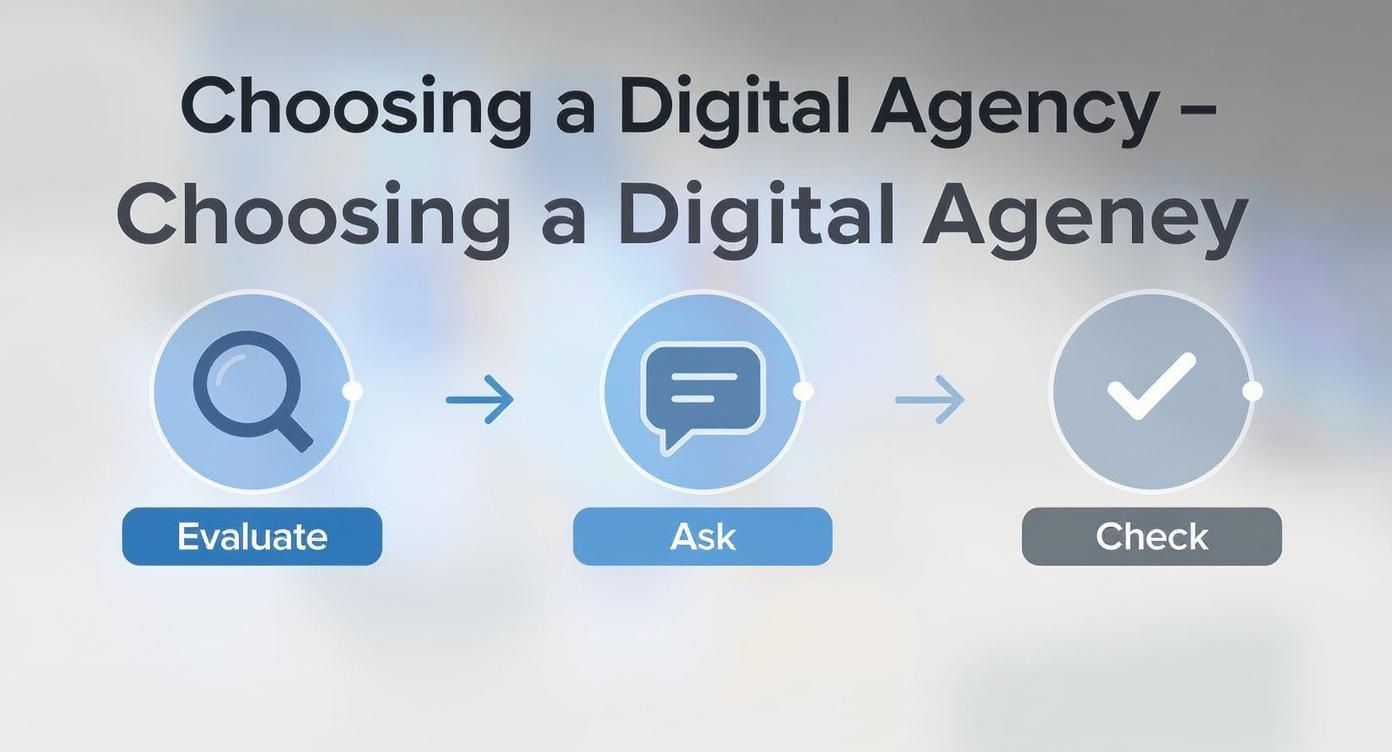
This process highlights the importance of doing your homework, asking direct questions, and checking references to ensure you find the right fit.
Implementation and Beyond
Finally, it’s time for Implementation & Launch. This is where the strategy becomes reality. The agency's technical team gets to work building, integrating, and testing the new systems. A huge part of this is automating manual tasks to free up your team’s time for more important work. You can get a better sense of the impact by learning how workflow business automations can supercharge team productivity.
A great agency manages this entire process with minimal disruption to your day-to-day operations. They handle the heavy lifting, train your team, and ensure the switch is as smooth as possible. But launch day isn't the finish line. It’s the start of an ongoing cycle of improvement, with support and optimisation to keep things running perfectly.
Measuring the Success of Your Digital Investment
So, how do you know if a big digital project was actually worth the investment? Once a new strategy goes live, the conversation has to shift from plans to results. It’s not about chasing vanity metrics; it’s about tracking real, tangible improvements that directly affect your business's health and growth.
A good digital transformation agency in Australia will sit down with you to define clear Key Performance Indicators (KPIs) before the project even starts. This gets everyone on the same page about what success looks like and how it will be measured, covering both internal efficiencies and the experience you deliver to your customers.
Beyond Surface-Level Metrics
It’s easy to get fixated on numbers like website traffic or social media likes. While those can tell part of the story, true transformation is measured by deeper data points that show genuine business improvement.
Here are the kinds of KPIs that actually matter:
- Operational Efficiency: This is about tracking how much time and money you’re saving. Think reduced manual data entry hours, a sharp decrease in process errors, and faster order fulfilment times.
- Customer-Focused Gains: A successful project should make your customers happier. You can measure this with higher customer satisfaction (CSAT) scores, an increase in repeat business, and a lower customer churn rate.
- Employee Productivity: A well-oiled business empowers its team. Look for signs like higher employee engagement and an increase in tasks completed per team member now that they're free from tedious, repetitive work.
Calculating Your Return on Investment
At the end of the day, every business decision comes down to the bottom line. Calculating the Return on Investment (ROI) for your digital transformation project gives you the hard proof needed to justify the expense to stakeholders, your board, or your team.
ROI connects the dots between your operational improvements and financial gains. It answers the simple but critical question: "Did we get more value out of this than we put in?"
The basic formula for ROI is straightforward: subtract the project’s total cost from the total financial gain it created, then divide that number by the project cost.
For example, say a new automated system cost $30,000. Within a year, it saved $50,000 in labour costs and helped generate $20,000 in new sales. Your net gain is $40,000, which gives you a very healthy ROI of 133%.
To see a real-world blueprint of how this works, you can explore how DigitUX helps clients define and track these crucial success metrics in our detailed case studies.
Frequently Asked Questions
When you're looking into digital transformation, many questions come up. Here are some straightforward answers to the ones we hear most often from Australian business owners.
How Long Does a Digital Transformation Project Take?
The timeline really depends on the scope. A focused project, like automating a specific process or launching a new e-commerce site, might take around 3-6 months.
However, if you're talking about a major overhaul of your core systems and the entire customer journey, you could be looking at anywhere from 12 to 24 months or longer. A good digital transformation agency in Australia will map the project out in clear phases, ensuring you see value at each milestone instead of having to wait until the very end.
Is My Small Business Ready for This?
Absolutely. Digital transformation isn't just for big corporations; it's completely scalable. For a small business, it often starts with something manageable that solves a real headache.
This could be as simple as:
- Switching to modern, cloud-based accounting software like Xero or MYOB.
- Implementing a simple CRM to better manage customer relationships.
- Building a professional e-commerce store to start selling online.
The key is to start with your biggest pain point and find a digital solution that gives you a strong, immediate return. You don't have to tackle everything at once.
What Is the Biggest Mistake Businesses Make?
The single biggest mistake we see is treating digital transformation as a technology project instead of what it really is: a business strategy project. Success depends on getting the culture right, having strong leadership buy-in, and communicating clearly with your whole team.
Focusing only on the shiny new software without managing the 'people' side of things is the fastest way to failure. Real transformation is about changing how your business runs, with technology as the enabler, not the entire goal. It’s about empowering your people, not just upgrading your systems.
Ready to build a more efficient and profitable business? DigitUX is a Brisbane-based digital transformation agency helping Australian businesses innovate, elevate, and automate. Book your free strategy session today to discover your path to scalable growth.
Article created using Outrank